Maria Stewart

Ms. Stewart offers an interesting insight to the role that abolitionist women played during the 1800’s. When she begins to discuss how the men would discredit her work, we can see how this affected her and how it somehow increased her passion. Something that caught my eye was that as she is talking about the men, she also discusses many powerful women that have been seen throughout history and in the Bible. She tells of their great works and how each of them had done different influential acts and she believes that she has also been as influential as these other women. This chapter required me to do more research about Maria Stewart. I discovered that she was also the first African American woman to lecture in public in the 1830’s!


Evangelist Amanda Smith

Amanda Berry Smith was a slave who was born in 1839. She inspired ample amount of  women. Amanda Smith was known as a great and respected leader for women in public ministry. She encountered a religious transformation and joined the African Methodist Episcopal Church. She preached in the African Methodist Episcopal Church. Amanda also preached in meetings of Methodists and Holiness teachings. She found it really hard to overcome gender bias because of her skin color and her being a woman herself. Amanda Berry Smith preached to black and white audiences, and she was known as a very popular speaker to both black and white audiences. Her only purpose was evangelism.


Image result for amanda smith evangelist

Jarena Lee: Psychotic or nah?

The story of Jarena Lee seems so familiar to me. I feel that every preacher or minister has a story that is very similar. Her journey sounds a bit psychotic, but I do not think it is. As a firm believer, I think that it was the Lord’s way of guiding her where she needed to be. One must go through trials to see the wonders of God. Also, those trials were in place to test her faith. She had to be knocked down to be picked back up as a strong believer. Her experiences are what crafted her into a better preacher. She’s literally been through hell, therefore, making herself a living testimony. This can help her creditability within the ministry. Members like to relate to leaders’ struggles. It makes her words more powerful because she’s been through so much but still rejoicing in the name of Jesus because she knows His power.

Jarena Lee and Depression

I am obviously not a psychologist, but to me, Jarena Lee’s experiences mirror the experiences of a lot of my religious family members who have dealt with depression.  What first spoke to me was when she was tempted to drown herself after her first interaction with the lord. I was genuinely shocked that someone could feel so strongly about religion, but the idea that she had depression didn’t occur to me until after she got sick, simply from the intensity of her feelings. This is something that I’ve seen happen very often, people falling into physical illness because of the strain depression puts on the body, or simply mistaking the symptoms of depression for illness.

In a way, her thought process is parallel to black churches thoughts on depression in this day. Although I’m not sure she had depression, the idea that her sadness was brought on by the devil in an attempt to sway her away from God is an idea that I have heard many times. Today, the cause of depression in the christian world is usually attributed to a “demon of depression,” or the devil trying to, “get you down.” To me, this idea kind of resonates in the way she speaks about her sadness and illness.

Here’s an article that talks about depression throughout history, and the things that have been thought to cause it.

Here is a video that talks about depression in the black church:

https://www.youtube.com/watch?v=G5dxqgps-Xs

Black Women in Church

Women were primarily not seen as able to preach. I have been to an Apostolic church where the statement is “women can teach, but they can’t preach.” It was around that time that I thought that I wanted to join the church, even though I already belonged to St. Thomas Baptist Church, where my preacher is a woman. I remained a Baptist mostly because, at the time, 12-year-old me did not want to wear skirts or dresses every day for the rest of my life. The women at that church were treated differently than how my church is. My church is literally run by women, women preach, schedule the gatherings, run choir rehearsal, and are ministers and trustees.

It is hard for to me to believe that at a time my church was not run by women and that today not many other black churches have a lot of women preachers. In all the readings, I thought that the women tried as hard as they could to serve the Lord at that time. Rosa Young made a school because she could not preach. That amount of dedication shocks me. For someone to be so committed to the Lord to go against everything at their time and make a school. The masculinity in churches became the norm. In white churches, the women were not preaching. But in Righteous Discontent,  some black women talked with white women about their churches.

Sernett Response

Chapter 29 of the Sernett reading, about Amanda Smith, related to a topic that I find very interesting. Smith talked about her experience as a traveling evangelist. She told stories about her experiences with other churches that she visited and people she encountered, whether positively or negatively. Although many of the experiences she described were positive, there were a few that upset her. She talked about going to an African American church service to hear another woman preach and being asked to sing. After the service, a strange woman asked who invited her and demanded that she leave. Another time, she was talking to a group of African American men about going to the General Conference to get ordained. The men scoffed at her and said that they would fight against women being allowed to be ordained. This reminds me of a concept that I learned about in an English class last semester known as “idealization of the victim.” Basically, this concept states that people tend to believe that victims of oppression or stereotyping will be less likely to oppress or stereotype other groups of people because they know the folly and unfairness of that and how it feels to be oppressed. While this is sometimes true, it is not always the case. In my English class we read a book called Maus, which was a true story narrated by a man whose father had survived the Holocaust. Obviously, as a Jew, his father was very much oppressed and stereotyped. He suffered incredible abuse at the hands of the Nazis simply because he belonged to a certain religious group. Yet in the States, years after the Holocaust, his father refused to stop for an African American hitchhiker. The narrator tried to rationalize his father’s decision by saying that stopping for hitchhikers in general can be dangerous, but his father replied that he would’ve stopped if the man hadn’t been black. Despite being the victim of unfair profiling, the narrator’s father unabashedly acted in the same way towards a different minority group. It’s even more shocking to me that Smith had similar experiences with people in the same oppressed group as her, whether it be the woman demanding she leave the church (presumably for being of a different religion) or the men treating her differently because she is a female.

Another Great Awakening and the Power of Women in Ministry

“The enthusiasm with which black women of all educational backgrounds and ages claimed their right to theological interpretation was characterized by Virginia Broughton as part of the ‘general awakening and rallying together of Christian women’ of all races.”

Righteous Discontent, page 127.

With the readings of this week, I couldn’t help but reflect on something I learned in history classes. There is the idea that women are, though not always recognized as such, the forerunners of revolutions, and the backbone that holds up a society’s ideals. The reason for this is simple enough: (most) women have and raise children, and they raise their children with the ideals, values, and morals they wish to exist in the future of society. Christian women, therefore, raise their children to be good Christians, living Christ-like lives, and spreading the Word of God.

Virginia Broughton and Mary Cook discussed these ideas in their writings and speeches. They talked about motherhood, wifehood, sisterhood, and daughterhood. All these different roles women had, and were able to wield influence in. I really enjoyed this reading, because it made me reflect on things that I’d never considered before. The idea of Eve coming from Adam’s rib, symbolizing women as man’s companion, close to their side and heart. Eve was not of his head or feet, subjugating and subordinating women to the “power” of man. The idea of women’s relationships with Jesus was also intriguing. No women, Broughton and Cook explained, had betrayed Jesus. And women had the “unique capability to cleanse immorality, indecency, and crime.” God had used women in every capacity in the Bible, and most importantly, chose a woman to carry and mother His son, Jesus. Mary, mother of Jesus, exemplifies the faithful Christian woman.

Women were able to use their roles in society to reinterpret theology, and the act of theologizing became “not limited to formally trained male clergy.” Women spoke out in conferences, wrote, and shared their voices with the country. They also focused on the “feminine power” of Christ, and that there was the emerging idea of double gender consciousness, expanding on ideas of WEB Du Bois’s double consciousness. There was another great awakening, this movement of femininity in Christianity, and the power of women within the church. 

Evelyn Brooks Higginbotham closed out the chapter with an idea that seems quite powerful. She said, “The feminist theologians had operated ‘from a stance of ‘radical obedience’.’ And indeed it was this vantage of orthodoxy that compelled the brethren to listen.” The women of this movement realized that more would be accomplished if they both took a stance for what they believed in, and remained within the lines of society. It just shows that some battles are won, some are lost, but thankfully, in the end, their efforts paid off and (most) branches of Christianity see the whole sphere of their religion, inclusive of gender, race, and everyone who shows a belief in Jesus.   


http://berkeleyjournal.org/2016/01/three-great-revolutions/

This links to an article discussing WEB Du Bois’s views on African-American women.

“At the 2015 conference of the American Sociological Association, five eminent scholars of W.E.B. Du Bois came together to discuss his works and his contributions to sociology. This essay has been adapted from the ASA panel discussion. ” 
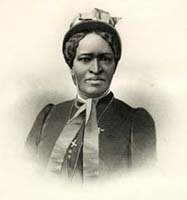
 

Jarena Lee: A Novel

The thing that’s so interesting to me about Jarena Lee is how much her story reads like a novel, and honestly, just how relatable it could be to my generation if retold.
She begins with her backstory, and this entirely reads as someone with major depression. She speaks at least three times of her want to kill herself, and while she says that it’s directly from the devil, one would be hard-pressed to provide an explanation as to how depression isn’t from the devil if you believe in that. This is the set-up, the exposition. She then talks about the conflicts she endured while trying to come to Christ– rising action and initial conflict. An especially eye-catching part of this is when she is given a novel to read instead of being allowed to read the Bible, as it sets up a direct human v human conflict. She also has visions of not quite a person v God conflict, but its inverse. Finally the setup is done when she is sanctified by the Lord in a secret place, away from both man and I guess the devil, has a moment of conflict, and then is a Christian. It’s a very normal setup to see within a novel.
You then have the main plot, which is her call and action to preach, and a subplot: her marriage. Finally, the rising action culminates in her being vindicated by her former mentor and going on to preach a sermon on the following Sunday that brought members of the congregation to tears. Then you’ve got a moment of falling conflict while she talks about the rest of her life continuing to preach in various places to various congregations: a happy ending of complete resolution.
This follows very well the traditional story arc of a novel, with mini-climaxes of conflict rising towards the major conflict’s resolution, and then falling action from there, with at least a bit of exposition at the beginning and follow-up at the end.

When I was a student author, this was the type of chart I was taught, and it amazes me how closely Lee’s story mirrors this chart.
You could easily make a novel or even a movie out of this by dramatising the conflicts between her and the devil, her own inner struggle with depression, and her fight to actually be allowed to preach as a woman minister. It’s really cool.

Days of Jubilee

I enjoyed this chapter because it was interesting and informative. I thought the chapter did a good job with explaining the events leading up towards some interracial churches. Henery McNealTurner was a prominent African Methodist Episcopal churchman, missionary, legislator, and newspaper editor in the south and it held thousands of people. I did not like how Turner and other African American leaders did all these amazing things but they were mistreated by other people. Turner and other preachers had to be careful what they would say during service or in newsletters because they would either get beaten badly or threatened. In order for this not to happen, people would stand guard in front of the churches and office building so people would not be able to touch these important figures. I enjoyed this reading because in some parts of the south there would be blacks and whites listening to the same preacher during service and it would not be a problem. I did not like how these people would be threatened or beaten just because of what they believe/say. It makes no sense to me what so ever. Just because people have a different opinion from their own, it does not mean they can hurt someone for it.

Post-Reconstruction South

Based on the “documentary witness” primary sources and selected “textbook” chapters providing necessary situational context we have read this semester, I have been consistently flabbergasted by the amount of historical similarities in the struggles African Americans have faced with agency and identity. Looking at William Wells Brown’s source, the italicized background “blurb” became incredibly important. There are three key issues Brown notices “resurgent white racism, the withdrawal of most northern liberals from the numerous freedman’s agencies, and the return to power of the traditional white elite had contributed to black regression in economics, politics, education, and wealth” (256). These issues really struck a chord with me because they seem almost parallel to demonstrations being carried out today.

I was also curious to learn more about Boston, Massachusetts. Multiple published black authors we have read lived in Boston toward the end of their life and since this city is in the north, it lends itself to a lesser perception of racism in America’s timeline. That being said, why was the educational/employment opportunities better here for African Americans? Is this only pre- or post-Reconstruction Boston? How censored were black authors in the north as compared to the south?